Hattori Hanzō in Nioh 3. Nioh 3 © KOEI TECMO GAMES, captured by GaminSapiens
Hattori Hanzō鬼の半蔵 · Demon Hanzō
Watch this chapter (24:12)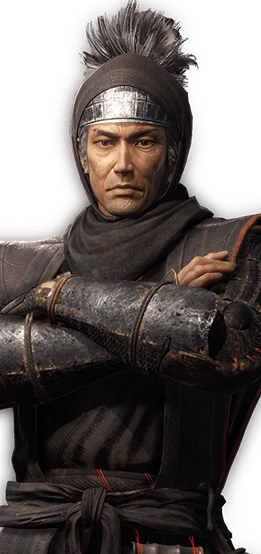
If you know one ninja name, it's probably Hattori Hanzō 服部半蔵. He's the retired swordsmith in Kill Bill and a playable ninja in Samurai Warriors.
Nioh 3 has two of him. The Hanzō killed in the 1622 prologue is Hattori Masanari, who inherited the name Hanzō from his father. The Hanzō you meet in 1572 is that father, whose name is also read Masanari but written with different characters, known as Hanzō the Demon. He scouts Futamata Castle for you and, at Mikatagahara, tells Takechiyo to hold the line while he goes for reinforcements.
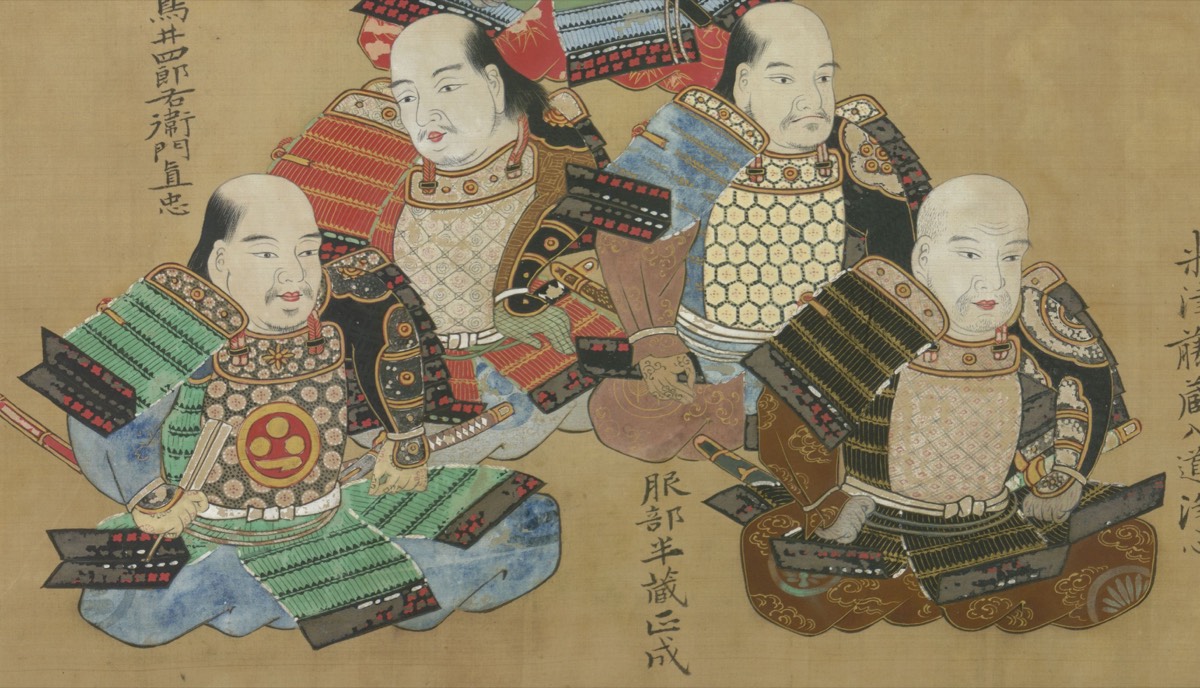
The real Hattori Masanari 服部正成 was born in 1542 in Mikawa. His father, Yasunaga, came from Iga 伊賀国, the mountain province later famous for its shinobi, and had moved east to serve Ieyasu's family. Masanari was a samurai commander, and the weapon he's remembered for is the spear.
Hanzō was the name passed down to the head of the family. His father used it, so did his sons, and one branch of the family kept it until the 1860s, so more than ten men answered to Hattori Hanzō. An old Mikawa work song gives Masanari his nickname, Oni Hanzō, Demon Hanzō, and pairs him with another Tokugawa retainer, Watanabe Moritsuna, who was Yari Hanzō, Spear Hanzō. The Iga men's own records, written in 1726, say Masanari was first into the fighting at Mikatagahara, that Ieyasu rewarded him with spears, and that afterwards he was given a hundred and fifty men from Iga to command.
The Ninja Overlord
The master of stealth and assassination of novels, films and games.
A Samurai Commander
A 2020 study by the researcher Tamura Risa traced the ninja Hanzō. He has no part in the first ninja boom of the 1910s. In the late 1930s a couple of writers began calling him a ninjutsu man, and between about 1958 and 1964 novelists turned him into the ninja overlord we know, above all Yamada Fūtarō in "The Kōga Ninja Scrolls" and Shibata Renzaburō in "Red Shadow". Film and television did the rest.
The historian Yamada Yūji, at Mie University's ninja research centre, thinks Masanari's job was to lead the shinobi of Iga, and that he probably never worked as one himself.
His best-known mission is the Iga crossing 伊賀越え of 1582. When Akechi Mitsuhide 明智光秀 killed Oda Nobunaga at the Honnō-ji 本能寺 in Kyoto, Ieyasu was at Sakai, near Osaka 大坂, with about thirty men, Honda Tadakatsu among them, in country that had suddenly turned dangerous. He got home by cutting across the mountains to the coast of Ise and taking a boat to Mikawa. Tokugawa tradition gives Hanzō and the men of Iga the credit, which is why it's called the Iga crossing. Modern historians are more careful. Most of the route ran through Kōka, and only about a tenth of it through Iga. The historian Fujita Tatsuo argues the story was shaped later, once the Iga men had become Tokugawa retainers, and Yamada says the sources record nothing Masanari himself did on the journey. What happened afterwards is clear: Ieyasu took on a few hundred Iga men as a guard unit, the Iga dōshin, under Hanzō's command.
There's one more story, and it happens at Futamata Castle, the place you fight through in the game. In 1579 Ieyasu's eldest son, Matsudaira Nobuyasu 松平信康, was ordered to commit seppuku 切腹 there, aged twenty. As a boy, Nobuyasu had carried the name Takechiyo too. The old story blames Nobunaga, who'd been told Nobuyasu was plotting with the Takeda. Recent research, by historians such as Kuroda Motoki, argues the decision came from inside the Tokugawa house, and that Nobunaga only agreed to it.
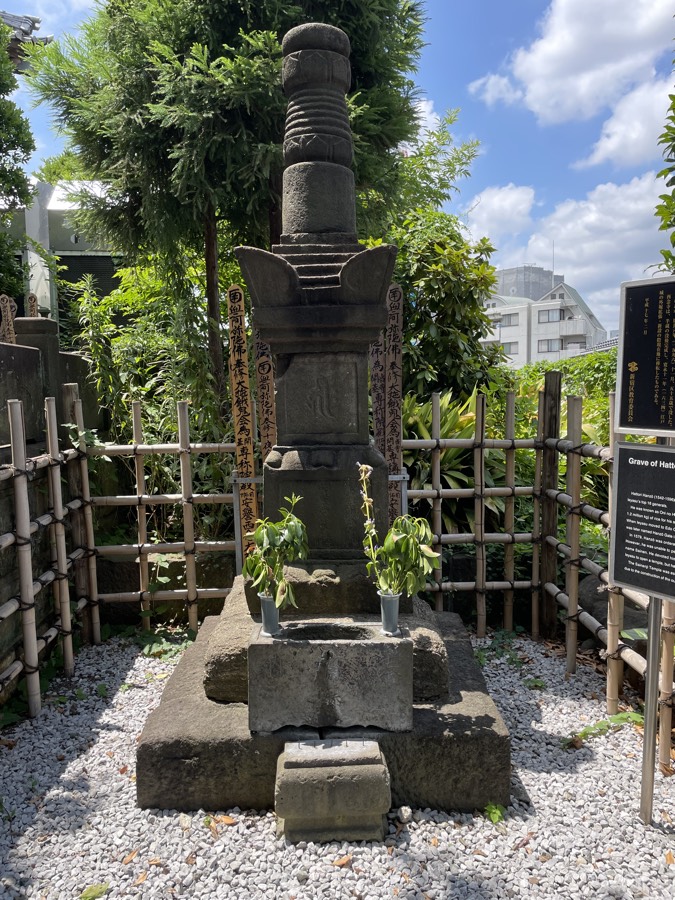
When Hanzō died in 1596 he was buried at a temple in Edo that later moved to Yotsuya and took his Buddhist name, Sainen. Sainen-ji still has his grave, his spear and a memorial to Nobuyasu, and the temple's tradition says Hanzō founded it to pray for him.